English Bridle Leather vs Latigo for Adjustable Camera Harness Straps
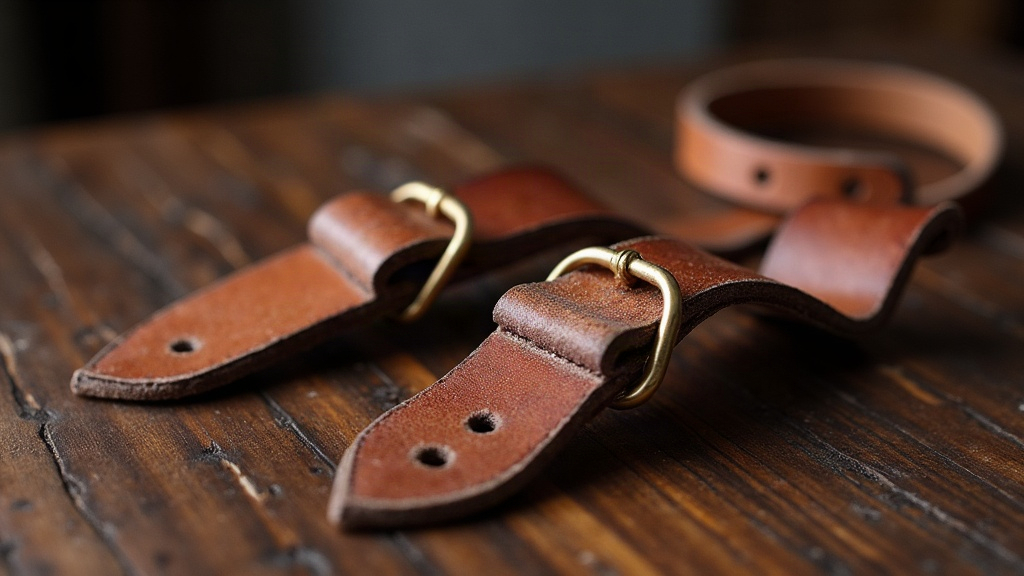
If you’re building or buying an adjustable camera harness strap, the leather you pick for the sliding section matters just as much as the webbing or hardware you bolt it to. English bridle leather and latigo are the two go-to options among strap makers, and they behave in completely different ways once they’re holding a few pounds of gear against your chest or hip for eight hours straight. English bridle leather is the better choice for most harness straps, thanks to its low stretch and dimensional stability. Latigo, on the other hand, shines for buckle tongues, keepers, and anywhere flexibility and moisture resistance matter more than rigidity.
What Makes Harness Straps Different From Regular Camera Straps
An adjustable harness strap has to pull off two jobs at once: hold its shape under tension, and slide smoothly through a slider or triglide buckle without binding, stretching, or curling at the edges. That’s a tougher ask than a basic neck strap. The leather is constantly flexing right at the adjustment point while still carrying load everywhere else along its length.
Load-bearing plus repeated flex at a single pivot point. That combination is precisely where the differences between these two tannages become obvious.
English Bridle Leather: The Stability Champion
English bridle leather is vegetable-tanned, then hot-stuffed with waxes, oils, and tallow, and finished with a waxed flesh side. It was developed originally for horse tack, where straps need to hold tension for hours on end without stretching out of shape. Think cinch straps on a working saddle that gets used six days a week.
Strengths for harness straps:
- Very low stretch over time, so your harness length stays put day after day
- Firm temper holds its shape through a slider, resisting that annoying edge curl
- Smooth, closed-grain surface feels refined against clothing, not scratchy
- Takes a beautiful burnished edge and ages into a rich, honest patina
Trade-offs:
- Less flexible when new. Give it a few weeks of use before it feels properly supple
- Can crack if it dries out and doesn’t get conditioned every so often
- Typically pricier per square foot than latigo, sometimes by a noticeable margin
Because bridle leather resists stretching, a harness length you dial in during setup tends to actually stay dialed in. Ask around and you’ll find this is the single biggest complaint photographers have about cheaply made harnesses: you set it once, shoot for a week, and suddenly the strap’s three inches longer than when you started.
Latigo: Flexible and Weather-Resistant
Latigo is a combination-tanned leather, often vegetable tan followed by a chrome or oil retan, heavily oiled and waxed. It was made originally for cinches and saddle strings, gear that gets wet, flexed, and abraded constantly out on the trail.
Strengths for harness straps:
- Naturally pliable, so it feels comfortable right out of the box, no break-in needed
- Handles moisture and sweat without stiffening up afterward
- Excellent for high-friction spots like buckle tongues and tie-downs
- More affordable, which makes it a solid pick for prototyping or budget builds
Trade-offs:
- More prone to stretching under sustained load than bridle leather
- Oilier surface can transfer onto light-colored clothing (a white shirt will show it)
- Less refined look overall, more “working tack” than “heritage accessory”
Side-by-Side Comparison
| Factor | English Bridle | Latigo |
|---|---|---|
| Stretch resistance | Excellent | Fair |
| Flexibility out of the box | Stiffer | Very flexible |
| Moisture/sweat resistance | Good (needs conditioning) | Excellent |
| Edge finish/appearance | Refined, burnishable | Rugged, oily |
| Best harness use | Main adjustable strap | Keepers, buckle tabs, tie-downs |
| Typical cost | Higher | Lower |
Which Should You Choose?
- Building a premium, long-term harness strap: Go with English bridle leather for the main adjustable length. It holds its set position for years and only looks better as it picks up a patina.
- Prototyping or building a budget-friendly strap: Latigo is forgiving, cheap, and comfortable from day one, though expect some creep in strap length after a few months of regular use.
- Hybrid approach (and this is what a lot of strap makers actually do): Bridle leather for the primary strap body, latigo for keepers, loops, and buckle tongues. You get stability exactly where it counts and flexibility exactly where the leather flexes the most.
Maintenance Tips
Whichever you end up choosing, condition the leather every 3-6 months with a leather balm or a neatsfoot oil blend. Pay extra attention to the slider contact points, that’s where friction dries out the fibers fastest. And keep both leathers out of direct sun or a hot car trunk. Either one will dry out and crack well before its time if you let it bake.
Conclusion
For an adjustable camera harness strap, English bridle leather wins on dimensional stability and long-term shape retention, exactly what you want from a strap that’s meant to stay at your chosen length without you fiddling with it every shoot. Latigo earns its keep on the smaller hardware pieces, where flexibility and moisture resistance count for more than rigidity. And if your budget and patience allow it, combining both leathers in one harness really does give you the best of both.