Bison Leather vs Water Buffalo Leather for Laptop Sleeve Panels
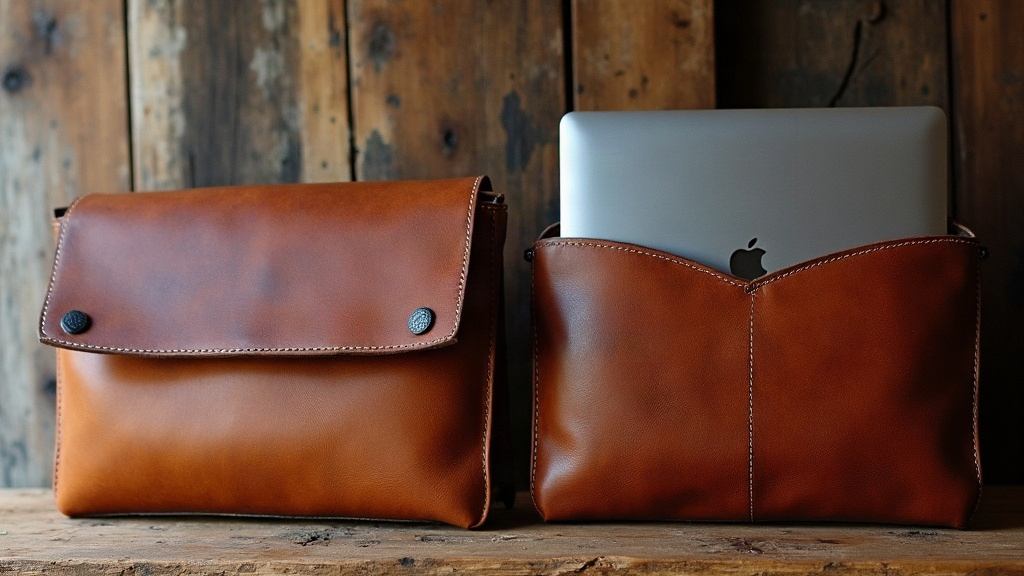
Bison leather and water buffalo leather both make excellent rugged laptop sleeve panels, but they don’t age the same way, and they don’t perform the same way either. Bison comes out of the gate thicker, pebblier, and more scratch-resistant. Water buffalo is denser, handles moisture better, and slowly develops a smoother, deeper patina the longer you carry it. Want a case that already looks tough on day one? Bison wins that round. Want a sleeve that just keeps getting better after years of commuting? Water buffalo takes it.
Why These Two Hides Dominate Rugged Sleeves
Most laptop sleeves still use cowhide, mostly because it’s cheap and easy to source. But bison and water buffalo have quietly become the go-to materials for makers building gear meant to survive backpacks, bike commutes, and the occasional drop on an airport floor. Both animals carry thicker hide structures than cattle, and that extra density translates directly into panels that shrug off punctures, abrasion, and the kind of corner wear that wrecks a thinner sleeve within a year.
Bison Leather: The Rugged, Grainy Choice
Bison leather comes from American plains bison, and the first thing you notice is that pebbled, almost pillowy grain. A few specifics worth knowing:
- Thickness: Usually 2.2–2.8mm for sleeve panels. That’s noticeably beefier than most cowhide you’ll find on the market.
- Surface texture: Coarse and irregular enough that scuffs basically vanish into the grain the moment they happen. Handy if you’re the type who tosses a sleeve into a backpack without thinking twice.
- Stiffness: Firmer right out of the box. It holds its shape and guards corners well, but it needs a few weeks of actual use before it loosens up and feels supple.
- Weight: Heavier than water buffalo at the same thickness, worth factoring in if you’re trying to keep an everyday-carry bag light.
- Water resistance: Fine with a wax or oil finish, though the open grain will soak up moisture faster if you skip treatment.
If you want something that looks rugged from day one and hides the first few months of wear without trying, bison is the one.
Water Buffalo Leather: Dense, Smooth, and Patina-Friendly
Water buffalo leather, often sourced from Southeast Asia or South America, has a tighter fiber structure. The animal’s hide simply carries less fat between fiber bundles, which makes the leather denser pound-for-pound than bison.
- Thickness: Typically 1.8–2.4mm, a bit thinner on paper, but the fiber density makes up for it in actual toughness.
- Surface texture: Smoother, with a subtler grain that burnishes into a glossy, almost polished patina the more you handle it.
- Flexibility: Pliable from the first day you use it, so it molds around a laptop’s shape fast, no long break-in period required.
- Water resistance: Naturally better at shrugging off moisture thanks to the tighter grain. If you’re walking to a train station in the rain twice a day, this matters more than you’d think.
- Weight: Lighter at comparable thickness. Small difference, but it adds up for anyone chasing a minimalist setup.
If you like the idea of a sleeve that softens and shines the more you use it, and especially if rain is part of your daily commute, water buffalo is the smarter pick.
Side-by-Side: Which Lasts Longer?
Run both through abrasion testing (floor drags, keys-and-coins pocket tests, corner drop simulations) and they both crush standard cowhide by a wide margin. But a few real differences show up:
- Scratch visibility: Bison swallows scratches into its grain almost instantly. Water buffalo shows light marks at first, then burnishes them into the patina over a few weeks.
- Puncture resistance: Bison’s extra thickness gives it a slight edge against sharp stuff like keys or zipper pulls digging in from inside a bag.
- Long-term structure: Water buffalo keeps tighter dimensional stability over the years. Its dense fibers resist stretching, which matters a lot for a sleeve that needs to stay snug around a laptop and not sag out over time.
- Smell and tanning: Both are usually vegetable-tanned or combination-tanned for sleeve use, and both carry that distinct leather smell that mellows out after a few months of airing.
Which Should You Choose?
Go with bison leather if:
- You want rugged looks right away with barely any maintenance
- Your laptop regularly ends up in rough environments (construction sites, fieldwork, floors, gravel, you name it)
- You’d rather have a stiffer panel that protects corners structurally
Go with water buffalo leather if:
- You want something that gets better looking and better feeling the more you use it
- Your daily commute involves actual weather, not just sunshine
- You prefer a lighter, more flexible panel that quickly molds around your device
Care Tips for Both
- Condition every 3 to 6 months with a neutral leather balm. Skip heavy oils on bison specifically, since its open grain soaks them up unevenly and can leave dark blotches.
- If either one gets wet, let it air dry on its own. Never point a hair dryer or heater at it.
- Store sleeves flat, or loosely rolled at most. Sharp folds leave permanent crease lines that never fully go away.
Final Thought
Both bison and water buffalo make genuinely tough laptop sleeve panels, the kind that’ll outlast ordinary cowhide by years, not months. Bison gives you instant, scratch-hiding ruggedness right out of the box. Water buffalo asks for a bit of patience and pays it back with a richer patina and noticeably better moisture resistance. Pick based on your climate, and on whether you’d rather have “tough from day one” or “gets better with every trip.” Either way, you’re walking away with a panel built for daily abuse.